4 Tips to Plan a Successful Exhibition Stand
Planning an exhibition stand? Get 4 practical tips on goals, branding, layout, and choosing an end-to-end partner. Get a quote from Hashtag10 today.
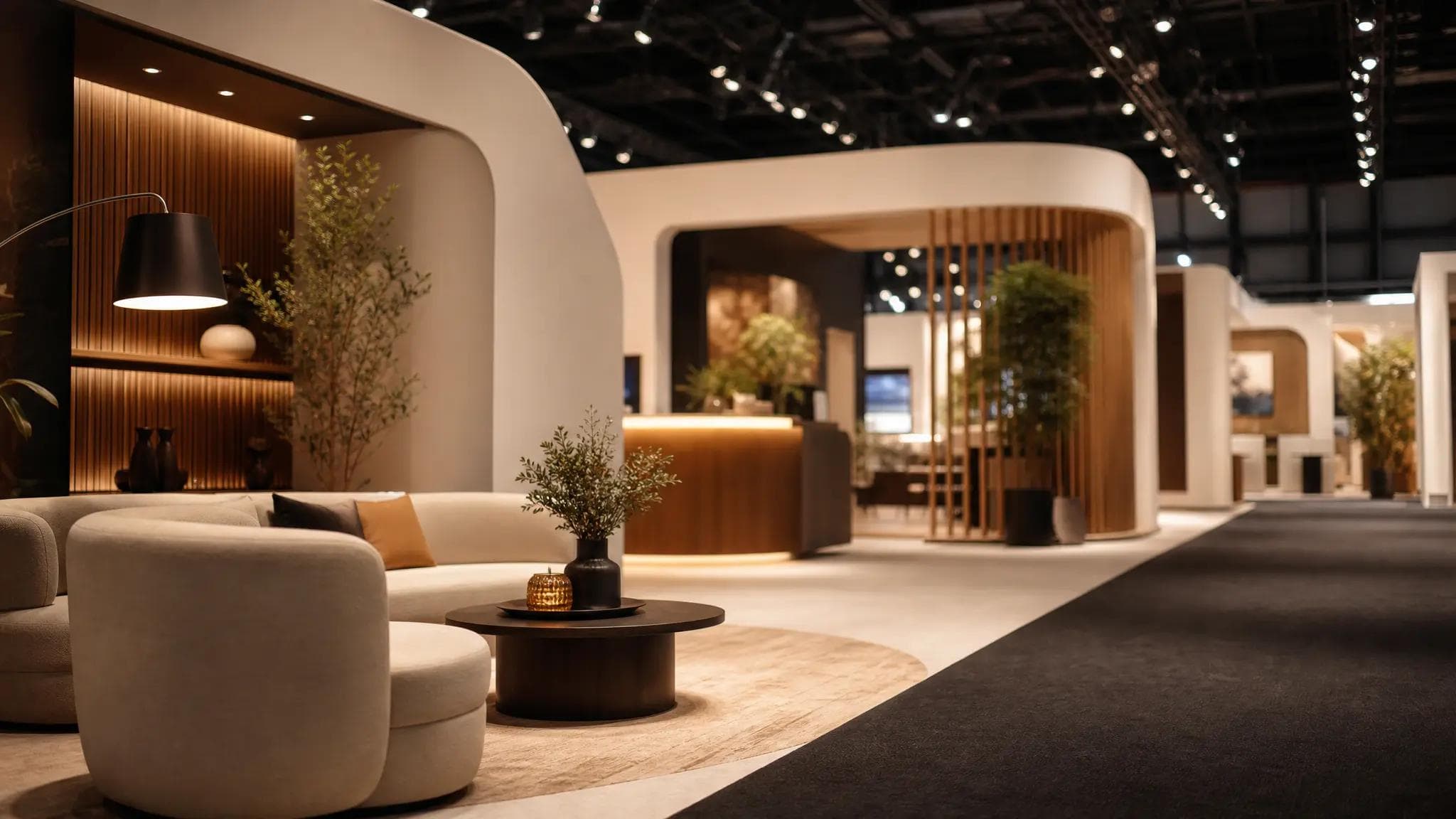
Hashtag10 outlines four practical considerations for planning an exhibition stand: defining business goals before design starts, building unmissable brand presence, creating space for real conversations, and choosing one partner for design, production, and installation. Each tip addresses a common reason exhibition budgets fail to convert into leads.
You've booked your floor space. The show is on the calendar. Now comes the part that determines whether your exhibition stand becomes a lead-generating asset or an expensive backdrop for coffee breaks: planning an exhibition stand around what you actually need it to do.
Most exhibitors start with the wrong question. They ask "what should our stand look like?" before they've answered "what is our stand supposed to achieve?" The result is a design that photographs well but doesn't move the needle on leads, meetings booked, or brand recall after the show ends.
Hashtag10 has designed and built stands for brands across the GCC, Egypt, and Europe at major shows including ADIPEC, GITEX, Big 5 Saudi Arabia, and TransMEA Egypt. Across those projects, four planning decisions consistently separate stands that perform from stands that simply exist. Here's how to get them right before your next exhibition.
1. Think Beyond Design: Start With Business Goals
A stand can look striking and still fail commercially if nobody defined what success was supposed to look like before the first sketch.
Before any concept work begins, you need clear answers to three questions: What does this exhibition need to achieve for the business? What does a successful show look like in measurable terms, whether that's qualified leads, meetings booked, or product demonstrations completed? And how does the physical design support that outcome rather than simply decorate it?
This matters because design decisions made without a goal tend to default to whatever looks impressive in a render. A large open structure might photograph beautifully, but if your actual objective is private one-to-one meetings with procurement decision-makers, an open layout works against you, not for you.
Set the goal first. Let the stand design follow from it, not the other way around. This is the same principle behind Hashtag10's Design, Build, Deliver process: every concept and 3D visualisation is built around what the client needs the stand to do at the show, not just what it should look like.
2. Make Your Brand Unmissable
On a packed exhibition floor with hundreds of competing stands, visitors form an impression in seconds. If your brand isn't immediately legible from a distance, you've lost the visitor before they've had the chance to walk over.
Three elements drive this: clear messaging that communicates what you do without requiring a conversation first, strong branding that's consistent with how the company presents itself elsewhere, and instant recognition, meaning a visitor walking past at a normal pace should know who you are and what you offer without stopping.
This is where a lot of stands underperform. Companies invest heavily in structure and finishes but treat messaging as an afterthought, added once the build is already locked in. The result is a stand that looks premium but says nothing specific. Effective exhibition branding works the other way: messaging and structure are planned together from the first concept stage, so the visual impact and the communication are doing the same job.
Practical specifics also matter here: signage height relative to aisle sightlines, contrast between brand colours and the venue's general lighting, and how your logo reads from 15 to 20 metres away rather than from two metres up close.
3. Create Space for Real Conversations
The point of exhibiting isn't foot traffic. It's the conversations that traffic makes possible. A stand that's all structure and no breathing room actively works against that.
This comes down to three layout principles: an open layout that doesn't trap visitors in narrow corridors, easy visitor flow that lets people move through the space without feeling pressured to commit to a conversation the moment they step in, and comfortable meeting areas where a genuine sales conversation can happen without visitors talking over each other or competing with noise from the aisle.
A common mistake is maximising display surface area at the expense of usable floor space. A stand packed with graphics and product displays but with nowhere comfortable to sit down and talk converts poorly, regardless of how strong the branding is. The stands that generate the most qualified conversations tend to balance visual impact at the perimeter with quieter, more private space further in, where the actual business conversation takes place.
If your sales team's main objective is meetings with decision-makers rather than passive brand exposure, the layout needs to reflect that from the floor plan stage, not be adjusted on-site once the structure is already built.
4. Choose an End-to-End Partner
Exhibition builds typically involve three distinct phases: design, production, and installation. When these are split across separate suppliers, accountability splits with them. A design issue gets blamed on production. A late delivery gets blamed on the designer. Nobody owns the timeline end to end.
Working with a single partner across design, production, and installation removes that gap. One team carries responsibility for the concept through to the moment your stand is standing, finished, and ready before doors open. It also tends to be faster: decisions made at the design stage can be tested against production realities immediately, rather than discovered as a problem after the design has already been signed off and handed to a separate fabrication team.
Hashtag10 fabricates stands in-house, meaning the same team responsible for the 3D concept is directly involved in how it gets built and installed. That continuity reduces the risk of last-minute surprises between what was designed and what arrives on the show floor, and it gives one point of contact for the entire project rather than three.
Bringing It Together
These four areas, business goals, brand visibility, conversation space, and single-partner accountability, are not independent design choices. They're sequential decisions that each shape the next. A stand designed around a clear goal naturally produces stronger messaging. Strong messaging needs the right layout to support real conversations. And none of it holds together reliably without one team accountable for the entire build, from first sketch to final installation.
If you're planning your next exhibition and want a partner who can take you from concept through to on-site delivery, Hashtag10's team works across the GCC, Egypt, and Europe and can talk through your stand requirements before you commit to a floor plan.
FAQ
How far in advance should I start planning my exhibition stand?
Most exhibition stand projects benefit from at least 8 to 12 weeks of lead time, covering concept design, client sign-off, fabrication, and installation scheduling. Larger or custom builds for major shows may need longer, particularly when freight and customs clearance are involved for international exhibitions.
What's the difference between a custom stand and a modular stand?
A custom stand is designed and built specifically for one brand and typically can't be reused for a different layout or show. A modular stand uses a reusable structural system that can be reconfigured for different floor sizes and shows, generally at a lower long-term cost for exhibitors attending multiple events per year.
Why does stand layout affect lead quality, not just foot traffic?
An open, well-planned layout encourages visitors to enter and stay rather than glance and walk past. Dedicated meeting space within the stand gives your team room to qualify a visitor properly instead of having a rushed conversation in a busy aisle, which generally produces better-qualified leads than high traffic with no space to convert it.
Should design or budget come first when planning a stand?
Neither in isolation. Define your goals and required outcomes first, then design and budget should be developed together, since layout, materials, and scale all have direct cost implications. Setting a budget before defining goals risks under-resourcing the areas of the stand that actually drive conversions.
Written by Hashtag10 Team
Expert insights on exhibition design, event strategy, and creating unforgettable brand experiences.
View all articles →